
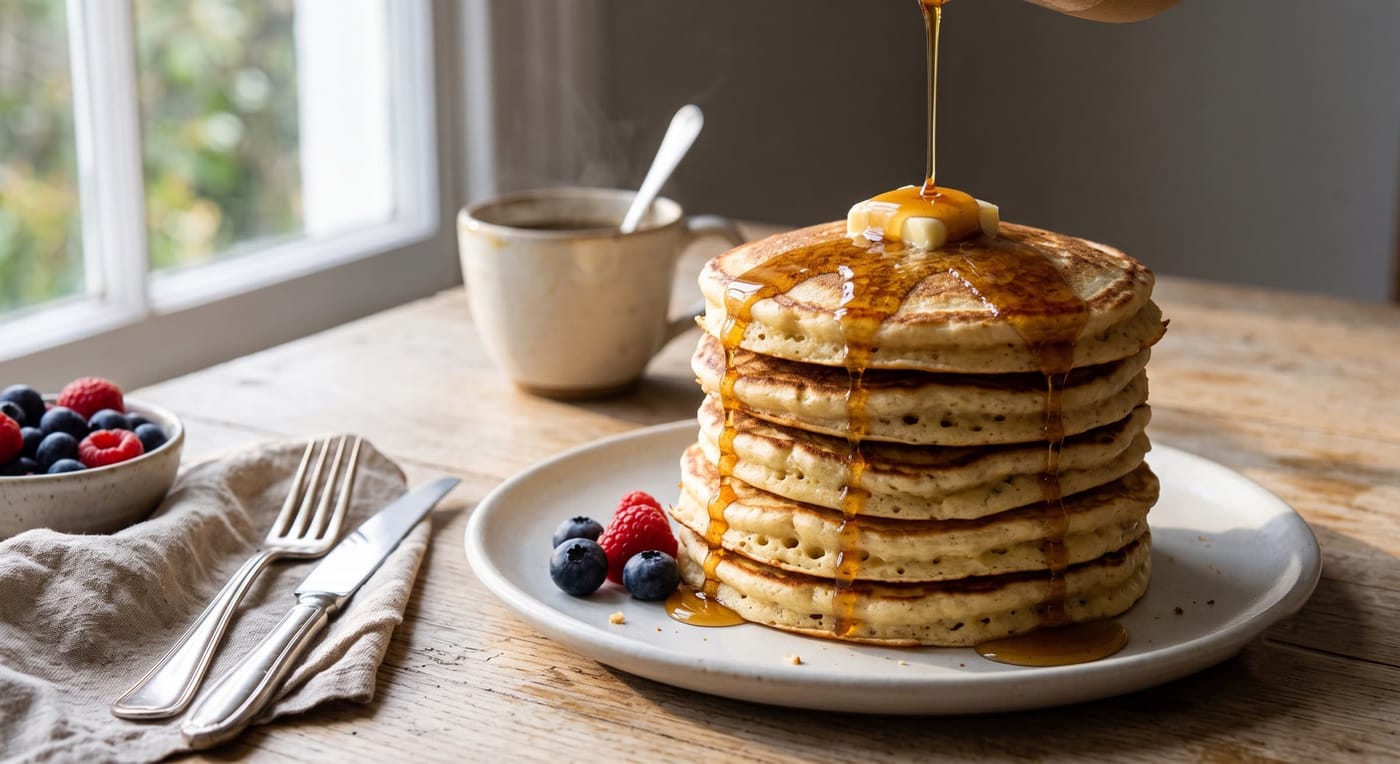
Buttermilk Pancakes
Recipes developed and tested by the ChefnFood editorial team, with chef-informed notes for real home kitchens.
Tall, tender, tangy pancakes from one bowl in twenty minutes. The weekend one, and the recipe worth knowing by heart.
Ingredients
- 2 cups (250g) all-purpose flour
- 2 tbsp granulated sugar
- 2 tsp baking powder
- 1 tsp baking soda
- 1 tsp kosher salt
- 2½ cups buttermilk
- 2 large eggs
- 4 tbsp unsalted butter, melted and slightly cooled, plus more for the pan
- 1 tsp vanilla extract
- Maple syrup and butter, for serving
Instructions
- Whisk the flour, sugar, baking powder, baking soda, and salt in a large bowl.
- In a separate bowl, whisk the buttermilk, eggs, melted butter, and vanilla.
- Pour the wet into the dry and stir with a spatula until just combined — about 12 strokes. The batter should be visibly lumpy with a few dry patches of flour still showing. This looks wrong and it is correct.
- Rest the batter 10 minutes. Don't stir it again. It will thicken and you'll see bubbles form on the surface.
- Heat a nonstick skillet or griddle over medium-low and brush with butter. Test with a spoonful of batter: it should sizzle faintly and take about 20 seconds to color. If it browns fast, the pan is too hot.
- Pour ⅓-cup portions, leaving space between them. Cook 2–3 minutes, until bubbles form across the surface and the edges look dry and set.
- Flip once and cook 1½–2 minutes more. Flip only once and never press down with the spatula.
- Hold finished pancakes on a rack in a 200°F oven while you cook the rest. Stacking them on a plate traps steam and makes the bottoms soggy.
Chef’s Take
Lumps are the recipe. Flour develops gluten the moment it meets liquid and keeps developing every time you stir, and gluten is what makes a pancake chewy and flat instead of tender and tall. Twelve strokes and a lumpy bowl gives you the former; a smooth batter gives you the latter. The ten-minute rest then does the smoothing for you — the flour hydrates on its own and the lumps disappear without any additional mixing.
Chef trick: medium-low, not medium-high. Home cooks almost universally run the pan too hot, which is why so many pancakes are dark outside and raw in the middle. A pancake needs 2–3 minutes on the first side to cook through; anything that browns faster than that is cooking the outside before the center has a chance. Lower heat, more patience, better pancake.
Substitutions
- No buttermilk: 2½ cups whole milk plus 2½ tbsp lemon juice or white vinegar, stirred and left 10 minutes. Works well. Do not skip the acid entirely — the baking soda needs it to lift.
- Blueberries or chocolate chips: scatter them onto each pancake after pouring rather than mixing them into the batter, which streaks it and makes them sink.
- Gluten-free: a 1:1 GF blend works; rest the batter 20 minutes instead of 10.
- Dairy-free: unsweetened almond or oat milk with the same vinegar trick, and oil in place of melted butter.
- Buttermilk waffles: same batter, add 2 tbsp more melted butter.
Storage and reheating
Refrigerate cooked pancakes up to 3 days. Reheat in a toaster — genuinely the best method — or at 350°F for 6 minutes. Freeze in a single layer on a tray, then bag them, up to 2 months; they go straight from freezer to toaster, which beats any boxed frozen pancake by a wide margin. Batter doesn't keep well; the leavening is spent within a couple of hours.
Serving suggestions
Real maple syrup and salted butter. Berries and whipped cream for a bigger brunch. Crisp bacon on the side, since a plate this sweet wants salt across from it.
More mornings worth getting up for
The Weekly Meal Plan: five dinners and a grocery list every week, plus new recipes.
More Breakfast & Brunch
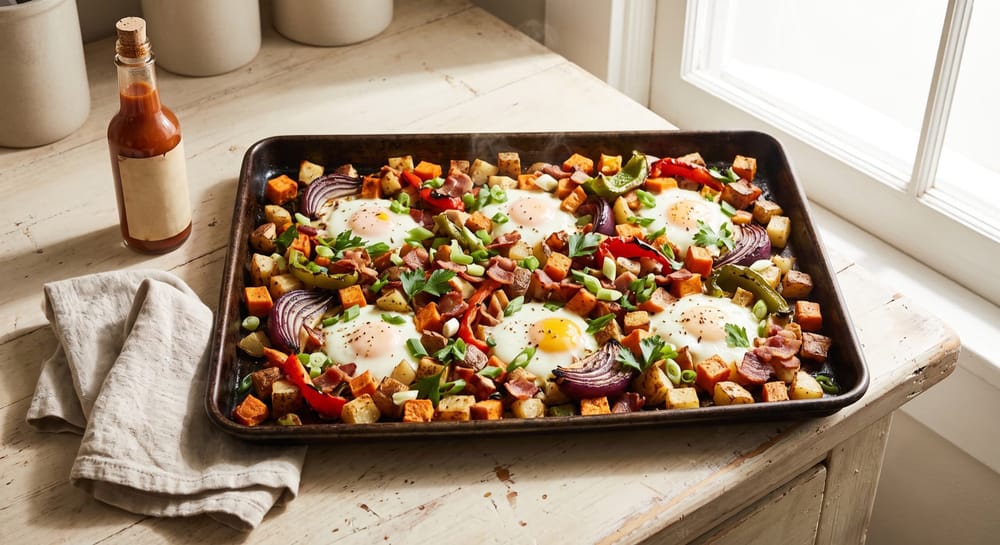
Sheet-Pan Breakfast Hash with Baked Eggs
One pan, forty minutes, and eggs baked directly into the hash. A hot breakfast for four with almost nothing to wash.
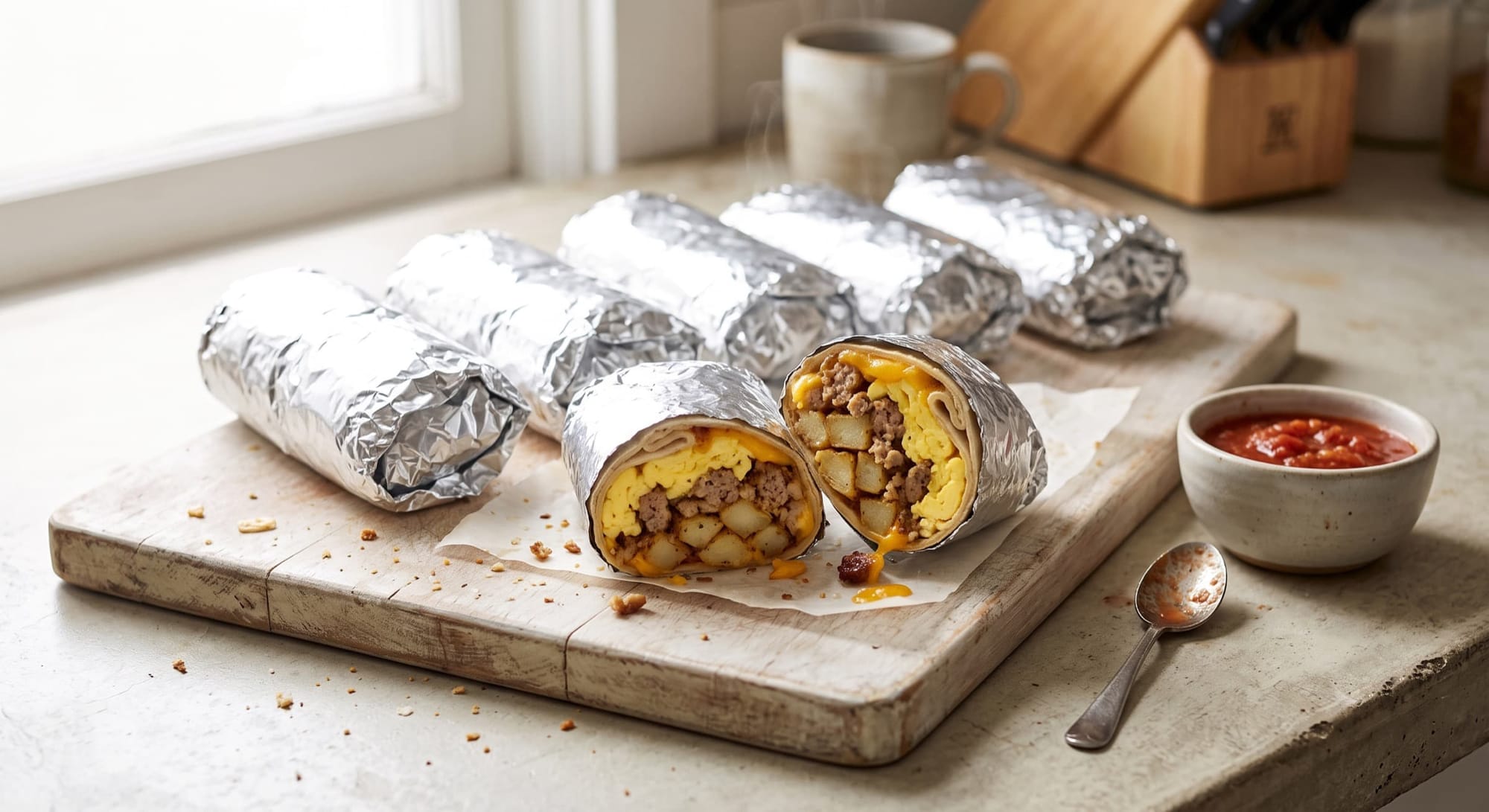
Freezer Breakfast Burritos
One Sunday afternoon buys you three weeks of hot breakfasts at about a dollar each. Wrap, freeze, microwave, leave the house.
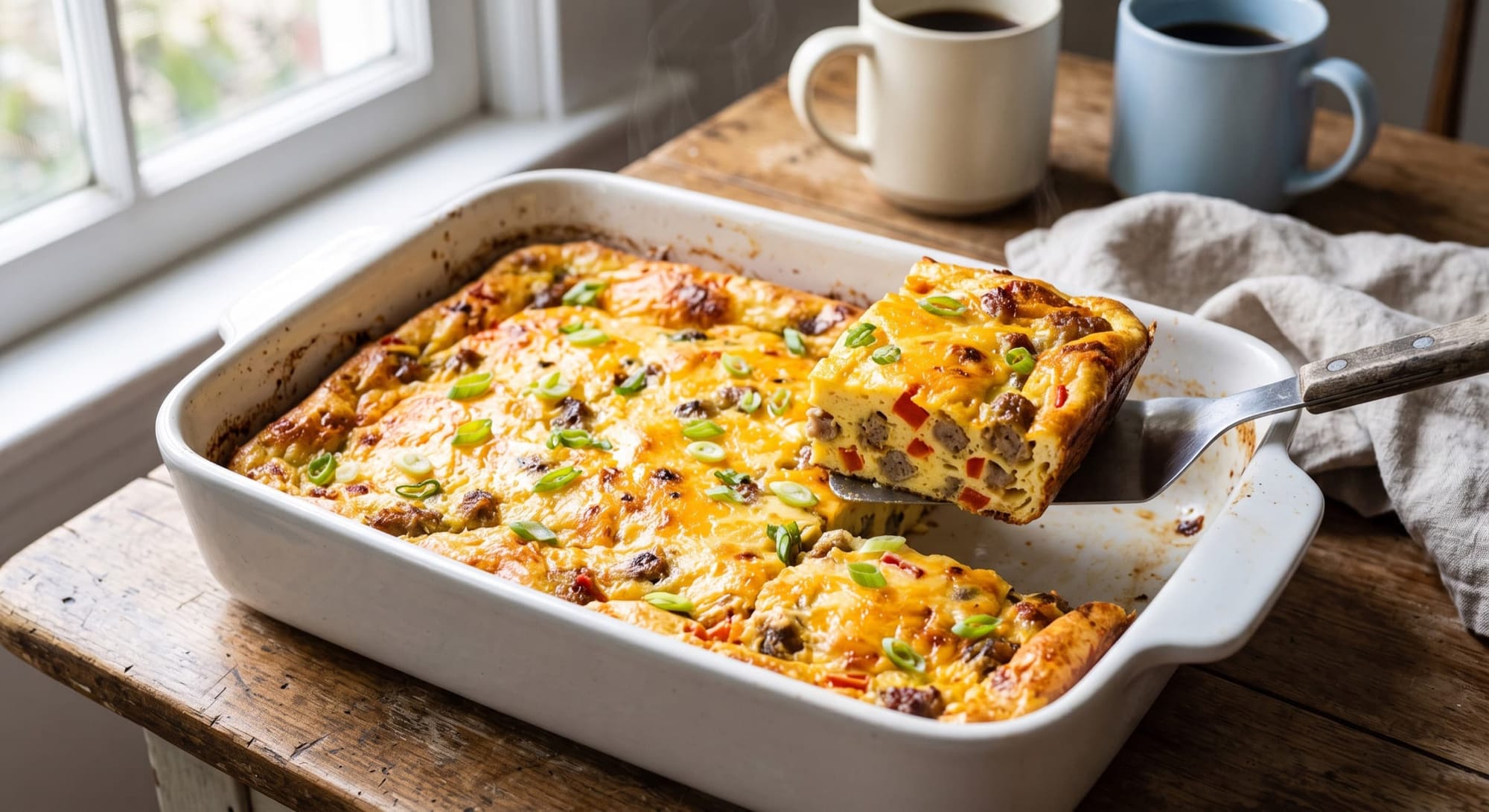
Make-Ahead Sausage and Cheddar Breakfast Casserole
Assemble Saturday night, bake it Sunday morning. Feeds eight people who are still in pajamas, with fifteen minutes of actual work.