
Cast Iron Care: How to Clean, Season, and Fix a Rusty Skillet
A cast iron skillet is close to indestructible cookware, which is why so many of them get passed down. It does ask for a slightly different routine than stainless or nonstick: wash it, dry it completely, and give it a thin coat of oil. When something goes wrong, like rust, a sticky surface, or flaking, the fix is almost always a scrub and a fresh round of seasoning in the oven. Here is how to clean, season, and restore a cast iron pan, based on guidance from Lodge (the long-running American cast iron maker) and university extension services.
What seasoning actually is
Seasoning is oil that has been baked onto the iron. When a thin layer of oil or fat is heated high enough in cast iron, it goes through a process called polymerization and turns from a wet liquid into a hard, slick coating bonded to the metal. That layer is what makes the pan release food easily and protects it from rust.
Lodge pans come seasoned from the factory, so new cast iron is ready to cook in, and every time you cook with oil or fat you add another layer of seasoning. That is why Lodge says the best way to maintain seasoning is simply to use the pan. Early layers of seasoning can look patchy; with regular cooking they fill in.
How to clean a cast iron skillet
Lodge describes everyday cleaning as three steps:
- Wash. Use warm, soapy water and a stiff brush or scrubbing pad.
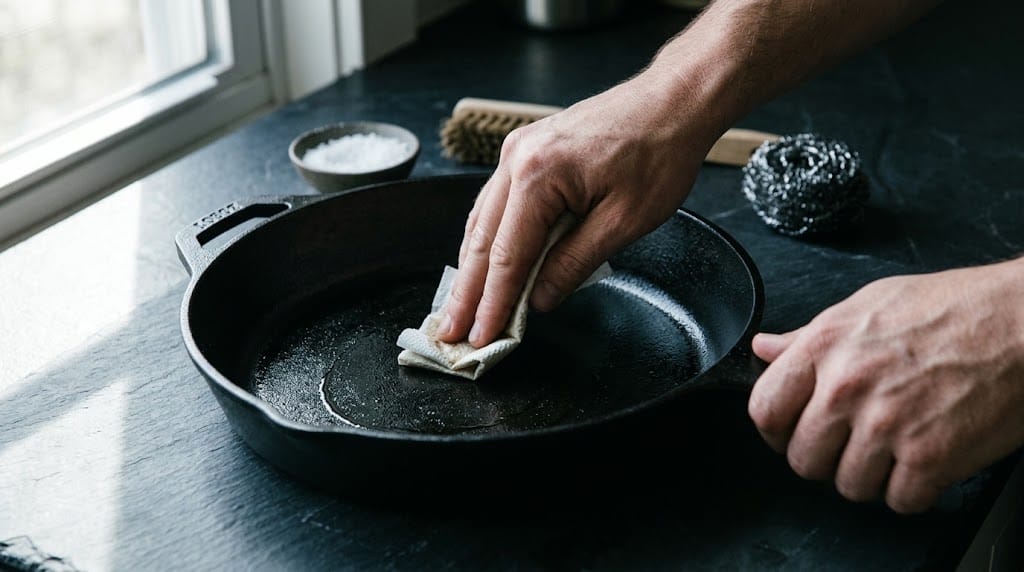
- Dry completely. Use a paper towel or lint-free cloth. Water left on the surface is what causes rust.
- Oil lightly. Rub a thin layer of cooking oil over the surface with a paper towel. It should not run or drip when you tilt the pan; too much oil leaves it sticky.
Can you use soap on cast iron?
Lodge says yes: today's dish soap is not strong enough to strip seasoning, and a little soap helps prevent buildup. Some extension guides, including N.C. Cooperative Extension, still recommend cleaning with just water and a towel to protect the seasoning. Both approaches work on a well-seasoned pan. The rules everyone agrees on are the ones that matter most:
- Never soak it. A skillet left sitting in water or in a wet sink will rust.
- Never put it in the dishwasher. Lodge says the dishwasher will remove the seasoning and likely cause rust.
- Never let it air dry. Dry it right away.
Stuck-on food
For stuck bits, use a nylon brush or a pan scraper under warm water. For tougher buildup, N.C. Cooperative Extension suggests boiling a little water in the pan and scraping with a wooden spoon. A wet towel with coarse kosher salt also works as a gentle abrasive. Lodge does not recommend steel wool for daily cleaning; save it for rust.
How to season a cast iron skillet in the oven
You only need to re-season cast iron cookware in the oven when the pan has been stripped by rust removal, looks dull and dry, or is a bare piece of cast iron that never had an initial seasoning. Lodge's seasoning process:
- Wash and dry. Wash the pan in warm, soapy water and dry it completely.
- Oil it thinly, everywhere. Rub a very thin layer of oil over the entire pan, inside and out. Wipe off any excess oil so the whole pan has a sheen, not a coating that drips.
- Bake upside down. Preheat your oven to 450°F to 500°F. Put a sheet of aluminum foil on the lower rack to catch drips, and set the pan upside down on the rack above so oil cannot pool on the cooking surface. Bake for 1 hour.
- Cool in the oven. Turn the oven off and let the pan cool inside, which helps the seasoning set.
N.C. Cooperative Extension suggests repeating the oil-and-bake cycle two or three times for a stripped pan; each round adds another layer of seasoning and leaves the pan a little shinier. Turn on your range hood or open a window, since heating oil past its smoke point gives off some fumes. You should never see flames or heavy smoke; if you do, there is too much oil on the pan.
Best oil for seasoning cast iron
For re-seasoning, Lodge recommends an oil with a high smoke point. Its test kitchen uses vegetable oil, melted shortening, or canola oil, and Lodge seasons its own pans with a soy-based vegetable oil. You do not need a specialty product. The amount matters more than the type: a thin layer every time.
How to fix a rusty cast iron skillet
Rust looks alarming, but on cast iron it is usually a surface problem. Lodge lists the usual causes: soaking in the sink, the dishwasher, air drying, or storage in a damp spot.
Light rust
- Scrub the rusty spots with steel wool in warm, soapy water. (Soap is fine here; you are about to re-oil anyway.) A wet towel and kosher salt can also lift small spots, according to Mississippi State University Extension.
- Rinse and dry completely.
- Rub on a very thin, even layer of oil, inside and out.
For small amounts of rust, Lodge says that may be all you need. Start cooking with it again and the seasoning will rebuild.
Heavy rust
- Scrub hard. Steel wool or a metal scouring pad and soapy water, focusing on the rusty areas.
- Use a vinegar soak if scrubbing will not do it. N.C. Cooperative Extension describes soaking the pan in equal parts water and white vinegar, which slowly dissolves rust. Check it every 15 minutes and take it out as soon as the rust flakes off. Mississippi State University Extension says to soak for no longer than 15 minutes at a time and check whether the rust will flake off.
- Wash, rinse, and dry completely right after the soak.
- Reseason in the oven using the steps above. Heavily rusted pans may need two or three rounds.
N.C. Cooperative Extension notes that extreme rust may need sandblasting or other intensive removal.
Troubleshooting common cast iron problems
| Problem | Likely cause | Fix |
|---|---|---|
| Sticky or tacky surface | Excess oil built up | Bake upside down at 450°F to 500°F for 1 hour; use less oil after washing |
| Black flakes coming off | Seasoning layers that did not fully bond | Scrub with a nylon brush or salt, rinse, dry, oil; reseason if it keeps happening |
| Dark residue on the towel | Normal, especially after acidic food or high heat | Nothing; it fades as you keep cooking |
| Dull or patchy color | Thin or uneven seasoning | Cook with oil (sauteed vegetables, shallow frying) or reseason in the oven |
| Rust spots | Moisture: soaking, air drying, dishwasher, damp storage | Scrub, dry, oil; reseason if the rust was widespread |
| Lingering fish or garlic smell | Strong odors in the seasoning | Wash well; cover with table salt overnight and rinse, or bake at 400°F for 15 minutes |
Lodge notes that flakes of seasoning are carbonized oil and are not harmful.
Cooking acidic foods in cast iron
Tomato sauce, wine, citrus, and vinegar can wear down seasoning. Lodge suggests avoiding long-simmered acidic dishes in a new pan. Once the seasoning is well built, acidic recipes with cook times under 45 minutes are fine. A quick pan sauce with a splash of lemon is no problem; a three-hour tomato sauce belongs in a stainless or enameled pot.
What to cook to build seasoning
Anything cooked with a good amount of oil or fat helps: searing chicken thighs on the stovetop, frying potatoes or bacon, baking cornbread, sauteing vegetables. A 10- to 12-inch cast iron skillet is one of the picks on our essential kitchen tools list, and it is the pan behind our skillet chicken pot pie and skillet peach crisp. The more you cook in it, the better it gets.
How to store cast iron
Store the pan completely dry, with its thin coat of oil, somewhere that is not damp. Moisture is what causes rust, so a dry cabinet or shelf is a better home than a damp spot under the sink.
FAQ
Can you use soap on a cast iron skillet?
Yes. Lodge says modern dish soap will not remove seasoning. What damages cast iron is soaking it, putting it in the dishwasher, or leaving it wet.
What temperature do you season cast iron at?
Lodge recommends 450°F to 500°F for 1 hour, with the pan upside down and foil on the rack below. Let it cool in the oven.
Why is my cast iron sticky after seasoning?
Too much oil. The excess did not fully polymerize. Bake the pan upside down at 450°F to 500°F for another hour, and next time wipe the oil off until only a thin sheen remains.
Is a rusty cast iron skillet ruined?
Usually not. Surface rust scrubs off with steel wool, and a vinegar soak handles heavier rust. After that, wash, dry, and reseason. Extreme cases may need sandblasting.
How often should I reseason cast iron?
If you cook with it regularly and oil it lightly after washing, you may rarely need a full oven seasoning. Do one when the pan looks dull, after rust removal, or when food starts sticking more than usual.
Sources
More like this in your inbox
The Weekly Meal Plan: five dinners and a grocery list, plus new recipes.