
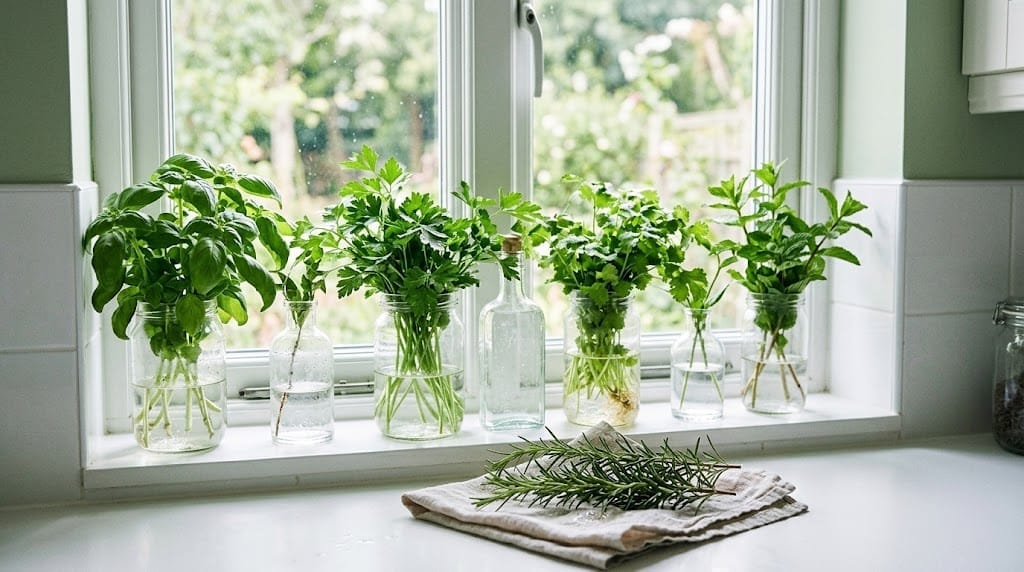
How to Store Fresh Herbs So They Last Longer
Fresh herbs are one of the easiest ways to make a plain dinner taste finished, and one of the easiest things to waste. A bunch of cilantro used for one taco night tends to turn into a dark, slimy wad in the crisper a week later. Most of that is avoidable. Herbs fall into two groups, soft and hardy, and each group has a storage method that works. Basil is the one exception, and it does not belong in the fridge at all.
Soft herbs vs. hardy herbs
Fresh herbs fall into two categories, and the first step is knowing which kind you have.
- Soft (tender) herbs have delicate leaves, soft stems, and lots of moisture: parsley, cilantro, dill, mint, chives, chervil, and basil. They wilt quickly when they dry out and bruise easily.
- Hardy (woody) herbs have tougher stems and less moisture: rosemary, thyme, sage, oregano, and bay. They last longer, but too much moisture or too little air can make them darken or mold along the stems.
The goal for both is the same: keep herbs fresh by slowing moisture loss without trapping so much excess moisture that the leaves rot.
Before you store them
- Do not wash them yet. Extra moisture speeds up spoilage. Shake or brush off any dirt and wash fresh herbs only right before you use them.
- Pick out bad leaves. Remove any yellow, damaged, or slimy leaves. The UC Davis Postharvest Research and Extension Center notes that trimming older leaves helps reduce bacterial soft rot, the slimy breakdown herbs are known for.
- Trim the stems. For herbs going into water, cut a little off the ends so they can drink.
How to store soft herbs: the jar method
The European Food Information Council (EUFIC) recommends storing leafy herbs such as cilantro, parsley, and mint upright in a glass of water, loosely covered with a plastic bag, in the refrigerator.
- Trim the stem ends.
- Stand the bunch in a mason jar or glass with about an inch of water, like a bouquet of flowers. Only the stems should be in the water, not the leaves.
- Drape a plastic bag loosely over the top. Do not seal it.
- Refrigerate, and change the water every couple of days or when it looks cloudy.
If fridge space is tight, the paper towel method below works for soft herbs too. Wrap the stem ends in a damp, well-wrung paper towel and slip the bunch into a loose, unsealed bag.
How to store hardy herbs: the damp towel method
Hardy herbs with woody stems, like rosemary, thyme, sage, and oregano, do best wrapped in a lightly damp paper towel and kept in a sealed container or bag on the bottom shelf or in the crisper drawer, per EUFIC. The towel should be damp, not wet; wring it out well. Check every few days and replace the towel if it dries out or gets soggy.
How to store basil (not in the fridge)
Basil is sensitive to cold. The UC Davis Postharvest Research and Extension Center lists basil and shiso as the only culinary herbs that are chilling sensitive. At refrigerator temperatures, basil leaves and tips brown, the veins bronze, and the leaves lose their gloss; cold storage also cuts its aroma. How fast the damage shows depends on how cold it is and for how long. Both UC Davis and EUFIC say basil should be kept above 10°C (50°F), which is warmer than a refrigerator should be.
Treat basil like cut flowers instead:
- Trim the stems and stand them in a glass with an inch of water, leaves above the waterline.
- Keep the glass on the counter, out of direct sunlight.
- Change the water regularly.
Stored this way, USDA's FoodKeeper data lists fresh basil at about 5 days. It is ideal for a week of tomato salads or our summer corn, tomato, and basil pasta. If basil stems start sprouting roots in the glass, you can pot them up.
How long fresh herbs last: shelf life by herb
Storage life varies with how fresh the herbs were when you bought them and how they are stored. These are typical ranges:
| Herb | Best method | Typical life |
|---|---|---|
| Basil | Jar of water on the counter | About 5 days (FoodKeeper) |
| Parsley, cilantro, mint, dill, chives | Jar of water in the fridge, loosely bagged, or damp towel in a loose bag | 7 to 10 days for fresh herbs (FoodKeeper); cilantro's aroma fades after about 10 days (UC Davis) |
| Rosemary, thyme, sage, oregano | Damp towel in a sealed container in the fridge | About 5 days (EUFIC); FoodKeeper lists fresh herbs in general at 7 to 10 days |
| Any herb, frozen | Chopped in oil or water cubes, or whole sprigs | 1 to 2 months for best quality (FoodKeeper); EUFIC cites up to 8 to 12 months |
EUFIC notes that herbs are past their prime when they turn limp or wilted, develop brown, yellow, or dark spots, or lose their aroma, and that herbs with an unpleasant smell or dark spots should not be eaten.
Where to put herbs in the fridge
- Away from ethylene producers. EUFIC recommends keeping herbs away from fruits and vegetables that give off ethylene gas, such as apples, tomatoes, peaches, plums, and pears. UC Davis notes that ethylene causes yellowing and leaf drop, and that mint, parsley, oregano, and marjoram are especially sensitive.
- Away from strong smells. Store herbs separately from onions and garlic so they do not pick up odors.
How to freeze fresh herbs for long-term storage
When you have more than you can use, freezing herbs saves the flavor. Frozen herbs lose their crisp texture, so use them in cooked dishes: soups, sauces, braises, and stews like our slow cooker white bean and sausage stew.
Ice cube trays with oil or water
Both EUFIC and the Auguste Escoffier School of Culinary Arts describe chopping soft herbs (parsley, cilantro, basil, dill, chives), packing them into ice cube trays, and covering them with olive oil or water. Once frozen solid, pop the cubes into a labeled freezer bag, pressing out the air to prevent freezer burn, and drop one straight into a pan when you cook.
Whole sprigs on a sheet
Hardy herbs like rosemary, thyme, sage, and oregano freeze well whole. Lay the sprigs in a single layer on a baking sheet, freeze until solid, then bag them. You can pull out one sprig at a time.
As pesto or herb butter
Blend soft herbs into pesto or mix them into softened butter, then portion into small containers or ice cube trays and freeze.
A safety note on herbs in oil
Fresh herbs and garlic covered in oil create a low-oxygen environment where Clostridium botulinum, the bacterium that causes botulism, can grow. Oregon State University Extension says homemade herb oils, garlic in oil, and pesto must be refrigerated and used within 4 days, or frozen for longer storage. Never keep homemade herb-infused oil at room temperature. The frozen oil cubes described above are fine as long as they stay frozen until you cook with them.
What about drying?
Drying is another option for hardy herbs. USDA's FoodKeeper data lists dried herbs at 1 to 2 years in the pantry. The NDSU and Purdue Extension food storage guide is more conservative at about 6 months for best flavor, and suggests checking the aroma: if it has faded, replace them. Keep dried herbs in airtight containers away from heat and sunlight. Our pantry staples list covers the dried herbs and spices worth keeping on hand.
FAQ
Should fresh herbs be washed before storing?
No. Extra moisture shortens their life. Shake off dirt, store them unwashed, and rinse them just before you use them.
Why does basil turn black in the fridge?
Basil is one of only two culinary herbs (with shiso) that are sensitive to cold. Refrigerator temperatures cause chilling injury, which browns or blackens the leaves. Keep it in a glass of water on the counter instead.
How do you keep cilantro fresh longer?
Trim the stems, stand the bunch in a jar with about an inch of water, cover it loosely with a plastic bag, and refrigerate. Change the water every couple of days.
Can you freeze fresh herbs?
Yes. Chop soft herbs and freeze them in ice cube trays with water or olive oil, or freeze hardy herb sprigs whole on a baking sheet. Use frozen herbs in cooked dishes, since they lose their crisp texture.
Is it safe to store herbs in olive oil?
Only in the refrigerator for up to 4 days, or in the freezer. Herbs and garlic in oil at room temperature carry a risk of botulism.
Sources
- How to Keep Potted and Fresh Herbs Fresh for Longer at Home, European Food Information Council
- Herbs (Fresh Culinary), UC Davis Postharvest Research and Extension Center
- How to Make Fresh Herbs Last Longer, Auguste Escoffier School of Culinary Arts
- Herbs and Vegetables in Oil, Oregon State University Extension
- FoodKeeper App, FoodSafety.gov
- Food Storage Guide (FN579), NDSU Extension and Purdue Extension
More like this in your inbox
The Weekly Meal Plan: five dinners and a grocery list, plus new recipes.