
What's in Season in September: A Produce Guide for Real Kitchens
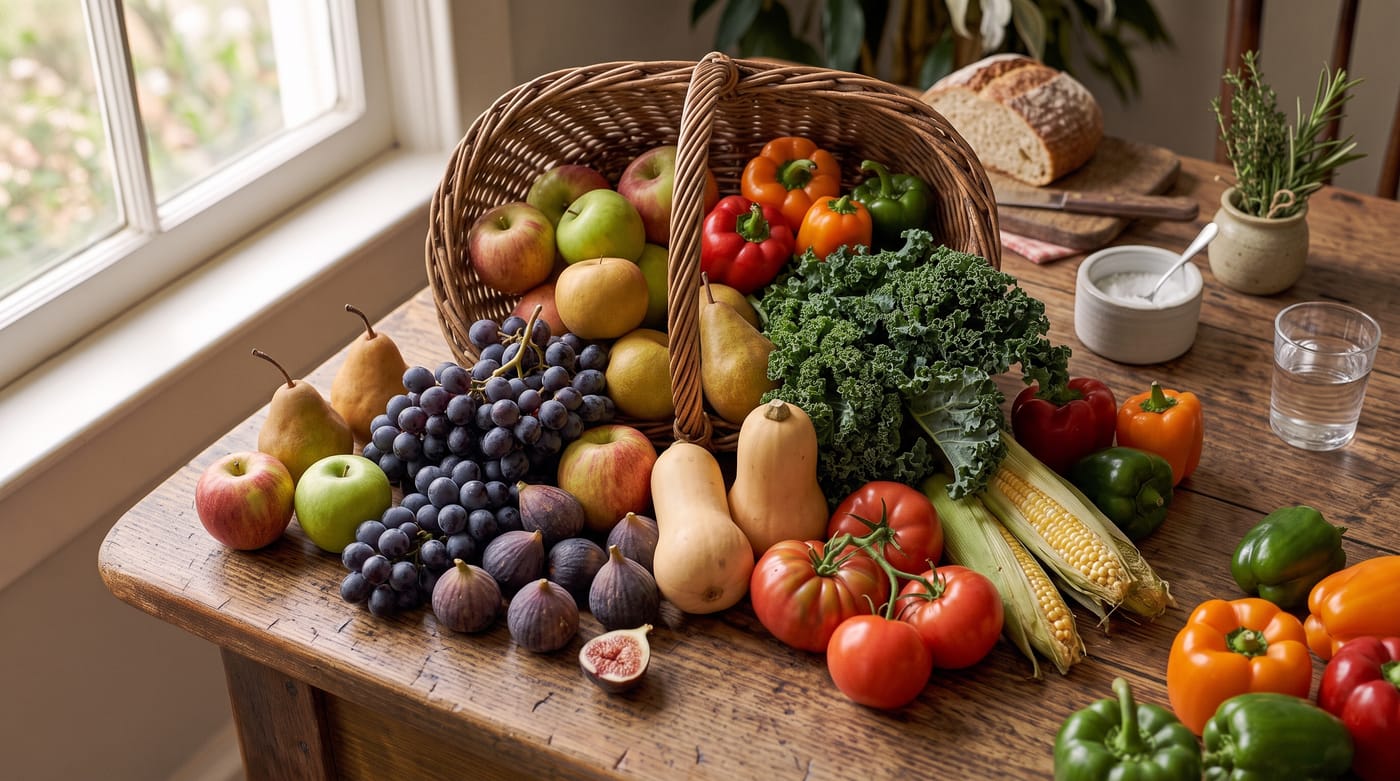
September is the best-stocked month in American seasonal produce. Summer hasn't finished (the last real tomatoes and sweet corn are still here) and fall has already started (apples, pears, and winter squash are arriving). Cooking with the overlap is the whole game this month.
Last call: buy these now
Tomatoes. The final field tomatoes are in, and they're the last ones worth eating raw until next July. This is the week for our corn, tomato, and basil pasta, precisely because its three stars all leave together.
Sweet corn. Winding down. Cut it off the cob and freeze a few bags; February soups will thank you.
Bell peppers. Peak abundance and peak cheap. Roast a sheet pan of them, jar them in olive oil, and you've made a month of sandwiches better.
Arriving: the fall bench
Apples. September is when they actually get good; a fresh-crop apple and a storage apple are different fruits. Eat the first ones raw and save baking for October's flood.
Pears. Ramping toward peak. Buy firm, ripen on the counter, and remember they ripen from the inside out: check the neck, not the belly.
Winter squash. Butternut, acorn, spaghetti, and the first pumpkins. They keep for months on a counter, which makes them the best value in the store from now to January.
Hearty greens. Kale, collards, and chard come back sweet as northern nights cool. The bitter August stuff is over.
Grapes, figs, plums, blackberries. The snacking tier is stacked; figs especially won't last the month.
Sweet potatoes and beets. The roots begin. Sweet potatoes hit real sweetness now, and an early beet roasted and sliced into a salad is a different vegetable than the winter storage kind.
Cooking the handoff
The trick to September is pairing the two seasons on one plate: roasted squash with the last tomatoes, corn folded into a chili as the nights cool, apples next to a pork braise. Our black bean and sweet potato chili and sheet-pan sausage and peppers are both handoff dinners, halfway between seasons on purpose.
Why seasonal buying actually matters
It's not romance, it's mechanics: in-season produce is picked riper, travels less, tastes better, and costs less because supply is high. Fruit and vegetables bought in their season simply start better. Treat this seasonal produce guide as a shopping list, and buying the September list over the January list becomes the easiest cooking upgrade that exists.
January - Citrus (oranges, grapefruit), kale, leeks, cabbage, beets, winter squash, potatoes
February- Citrus, broccoli, cauliflower, leeks, kale, turnips, stored apples
March- Spring greens, spinach, radishes, leeks, rhubarb, early asparagus (South)
April- Asparagus, peas, lettuce, spinach, radishes, rhubarb, strawberries (South)
May- Strawberries, asparagus, peas, lettuce, spring onions, new potatoes, rhubarb
June- Strawberries, cherries, zucchini, peas, green beans, lettuce, early tomatoes (South)
July- Tomatoes, sweet corn, peaches, blueberries, cucumbers, zucchini, peppers, melons
August- Tomatoes, sweet corn, peaches, melons, peppers, eggplant, summer squash, berries
September- Tomatoes, apples, peppers, grapes, eggplant, late corn, early winter squash
October- Apples, pumpkins, winter squash, sweet potatoes, broccoli, cauliflower, Brussels sprouts
November- Winter squash, sweet potatoes, Brussels sprouts, kale, leeks, pears, cranberries, root vegetables
December- Citrus, winter squash, potatoes, kale, leeks, Brussels sprouts, root vegetables
Sources
More like this in your inbox
The Weekly Meal Plan: five dinners and a grocery list, plus new recipes.