
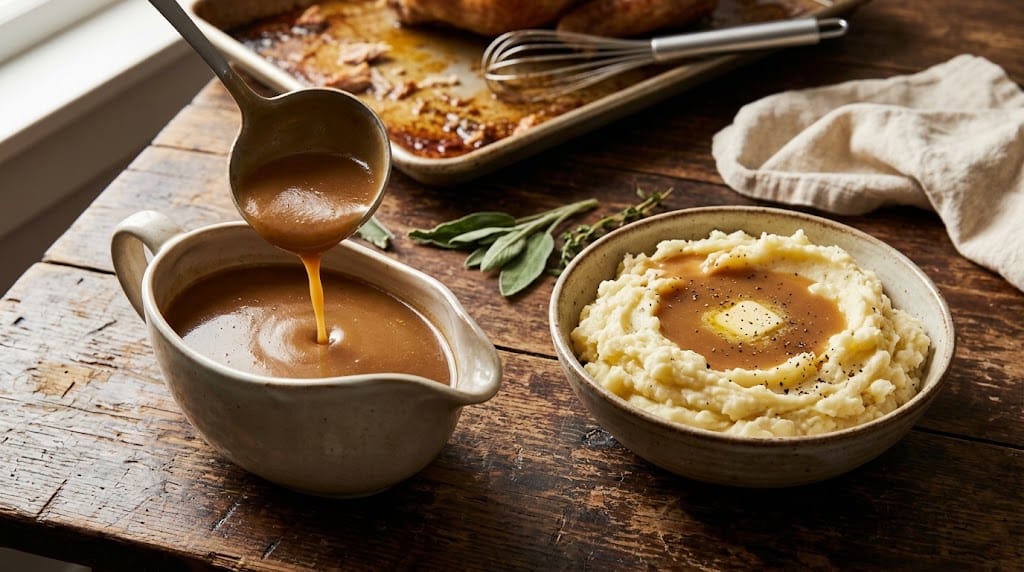
How to Make Turkey Gravy From Drippings (No Lumps)
Recipes developed and tested by the ChefnFood editorial team, with chef-informed notes for real home kitchens.
This easy turkey gravy from drippings takes about 20 minutes, and you can make it while the turkey rests. The method is simple: skim the fat from the pan drippings, cook it with flour to make a roux, then whisk in the defatted drippings and turkey stock a little at a time. Getting that last step right is what keeps the gravy smooth, rich, and free of lumps. This homemade turkey gravy recipe uses an easy ratio from Iowa State University Extension: 2 tablespoons of fat and 2 tablespoons of flour for every cup of liquid.
Ingredients
- Pan drippings from 1 roast turkey
- About 4 cups turkey stock or low-sodium chicken broth, warmed (you need 4 cups of liquid in total, drippings plus stock)
- ½ cup (8 tbsp) turkey fat skimmed from the drippings, topped up with unsalted butter if needed
- ½ cup (60 g) all-purpose flour
- 1 tsp chopped fresh thyme or 4 fresh sage leaves, chopped (optional)
- Salt and black pepper, to taste
- Optional: 1 tsp soy sauce or 2 tbsp dry white wine, for extra depth
Instructions
- Collect the drippings. Make sure the whole turkey has reached a safe 165°F before you start. Move the cooked turkey to a cutting board to rest. Pour the pan drippings and turkey juices through a fine-mesh strainer into a fat separator or a 4-cup measuring cup. Let them stand 5 minutes so the fat rises to the top.
- Deglaze the roasting pan. If your roasting pan is stovetop-safe, set it over two burners on medium heat, add 1 cup of the stock, and keep scraping up the browned bits stuck to the bottom of the pan with a wooden spoon for 2 minutes. Strain this liquid into the measuring cup with the drippings. If your pan is not stovetop-safe, pour in hot stock and scrape it off the bottom of the roasting pan off the heat.
- Separate the fat. Skim off ½ cup of fat with a spoon or pour it off the top with the separator. If you have less than ½ cup, add butter to make up the difference. Add enough stock to the defatted turkey drippings to make 4 cups of liquid in total, and keep it warm.
- Make the roux. Heat the fat in a large saucepan or deep skillet over medium heat. Whisk in the flour and cook, whisking constantly, for 2 to 3 minutes, until the roux bubbles, turns golden brown, and smells toasty.
- Whisk in the liquid slowly. Pour in about 1 cup of the warm liquid while whisking hard. The roux will tighten into a thick paste at first; keep whisking until smooth. Then slowly pour in the rest in a steady stream, whisking the whole time.
- Simmer. Bring the gravy to a boil, then reduce the heat and simmer 5 to 10 minutes, whisking often, until the gravy thickens enough to coat a spoon. Add more stock if it gets too thick.
- Season. Stir in the herbs and the soy sauce or wine, if using. Taste first, then add salt and pepper. Drippings are often salty, especially from a brined turkey, so you may need little or no salt.
- Strain if needed. For a perfectly smooth turkey gravy, pour it through a fine-mesh strainer into a warm gravy boat just before serving.
Chef’s Take
Lumps form when dry flour hits hot liquid and the outside of each clump gels before the inside gets wet. A roux prevents that, because cooking the flour in fat first coats every granule so it can spread out through the liquid. The other half of the fix is patience: add the first cup slowly and whisk it smooth before you add the rest. Dumping in all 4 cups at once is the most common way to get lumpy gravy.
Chef trick: warm the stock before it goes in. Hot roux and warm liquid blend smoothly and the gravy comes to a simmer fast, which matters when the turkey is resting and everything else is ready. If lumps still sneak in, Iowa State University Extension's fix works: blend the gravy with an immersion blender or strain it.
Substitutions
- Not enough drippings: make up the fat with butter and the liquid with turkey stock or chicken broth. The gravy will be lighter in flavor, so a splash of soy sauce helps.
- Cornstarch (gluten-free) gravy: skip the flour and roux. Bring 4 cups of defatted drippings and stock to a simmer, whisk 4 tbsp cornstarch into ½ cup cold water to make a cornstarch slurry, whisk it in, and simmer 1 to 2 minutes until thick. Iowa State University Extension notes cornstarch gravy is more translucent than flour gravy, should not be boiled hard, and does not freeze well. Potato starch also works.
- Giblet gravy: while the turkey roasts, simmer the neck, heart, and gizzard in the stock for about an hour, as University of Illinois Extension does for its giblet stock, then chop the meat and stir it into the finished gravy. USDA says to remove the giblets after thawing and cook them separately.
- Herbs: sage, thyme, and rosemary all fit turkey gravy. Add fresh herbs at the end so they stay bright.
How to fix turkey gravy
Even the best turkey gravy can need a quick adjustment at the last minute. Most problems are easy to correct:
- Too thin: simmer it longer to reduce, or whisk in a small slurry of flour or cornstarch and cold water and bring it back to a boil.
- Too thick: whisk in more warm stock, a few tablespoons at a time, until it reaches the desired consistency.
- Lumpy: strain it or use an immersion blender.
- Too salty: add unsalted stock to dilute it, and thicken a little more if needed.
- Greasy: let it sit a minute and skim the fat from the top.
- Bland: add salt, herbs, a few drops of soy sauce, or sautéed onions or mushrooms, as Iowa State University Extension suggests.
Storage and reheating
Gravy is perishable. USDA's Food Safety and Inspection Service says to discard turkey, stuffing, and gravy left at room temperature longer than 2 hours (1 hour above 90°F). Refrigerate leftover gravy in shallow containers within 2 hours and use it within 3 to 4 days, or freeze it for 4 to 6 months. When you reheat gravy, FSIS says to bring it to a rolling boil. Whisk in a splash of stock as it heats, since gravy thickens in the refrigerator.
Make ahead: you can make the roux and simmer it with stock up to 3 days ahead, refrigerate it, then reheat it to a boil on Thanksgiving and whisk in the defatted drippings from the roasting pan for flavor.
Serving suggestions
Serve it over sliced roast turkey, mashed potatoes, stuffing, and biscuits. Leftover turkey gravy is the base of a quick pot pie; use it in place of the sauce in our skillet chicken pot pie with a biscuit top, with leftover turkey instead of chicken. Before you pour the drippings, make sure the turkey is done: USDA's safe temperature is 165°F in the thickest part of the breast, the innermost thigh, and the wing. Our meat cooking temperatures chart has the full list, and a fat separator and a sturdy whisk are worth adding to an essential kitchen tools list.
FAQ
Do you need to separate the fat from the drippings?
Yes. The fat makes the roux, and the defatted drippings flavor the liquid. Gravy made with all the fat left in turns out greasy, and the fat separates on top.
How much flour does it take to thicken 2 cups of gravy?
Use 4 tablespoons of flour cooked in 4 tablespoons of fat for 2 cups of liquid. That is Iowa State University Extension's ratio of 2 tablespoons each of fat and flour per cup, which makes a rich, thick gravy. Use a little less flour for a thinner gravy.
Can you make gravy without drippings?
Yes. Use butter for the fat and turkey or chicken stock for the liquid, following the same steps. Roasting a few turkey wings ahead of time gives you drippings for make-ahead gravy.
How early can I make turkey gravy for Thanksgiving?
Up to 3 days ahead, using butter and turkey broth or stock, then refrigerate it in a shallow container. On the day, bring it to a rolling boil and whisk in the defatted drippings and the juices from the pan to make turkey gravy that tastes freshly made.
Is flour or cornstarch better for turkey gravy?
Flour makes a classic opaque gravy that reheats and freezes well. Cornstarch makes a glossier, gluten-free gravy that thickens quickly but does not freeze well.
Sources
- AnswerLine: Gravy, Iowa State University Extension and Outreach
- Giblet Gravy, University of Illinois Extension
- Giblet Stock for Gravy, University of Illinois Extension
- The Food Factor: Turkey Gravy, Mississippi State University Extension
- Let's Talk Turkey: A Consumer Guide to Safely Roasting a Turkey, USDA FSIS
- Turkey Basics: Handling Cooked Dinners, USDA FSIS
- Leftovers and Food Safety, USDA FSIS
More weeknight dinners like this one
The Weekly Meal Plan: five dinners and a grocery list every week, plus new recipes.
More Seasonal Picks
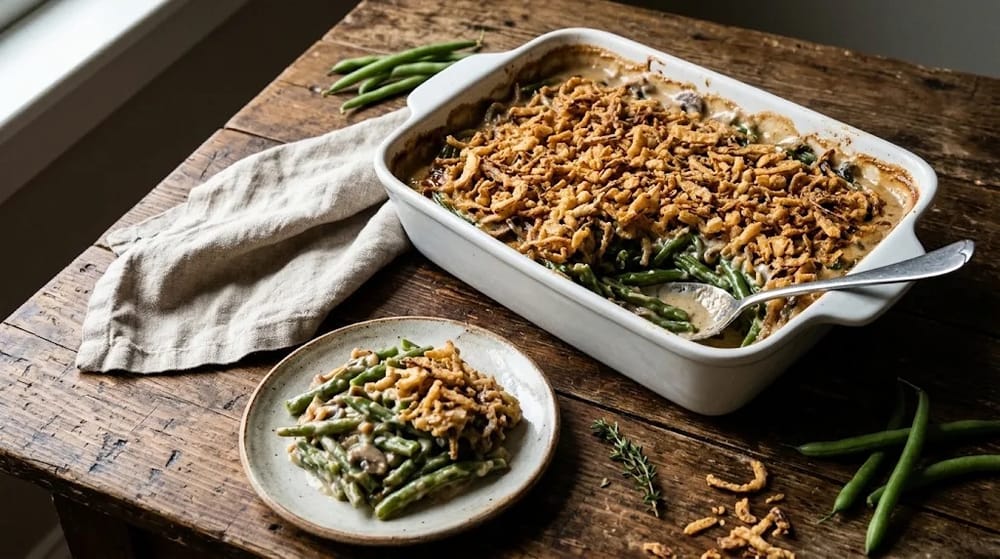
Green Bean Casserole From Scratch
Fresh green beans, browned mushrooms in a quick homemade sauce, and crispy skillet-fried onions. No canned soup, and you can assemble it a day ahead.
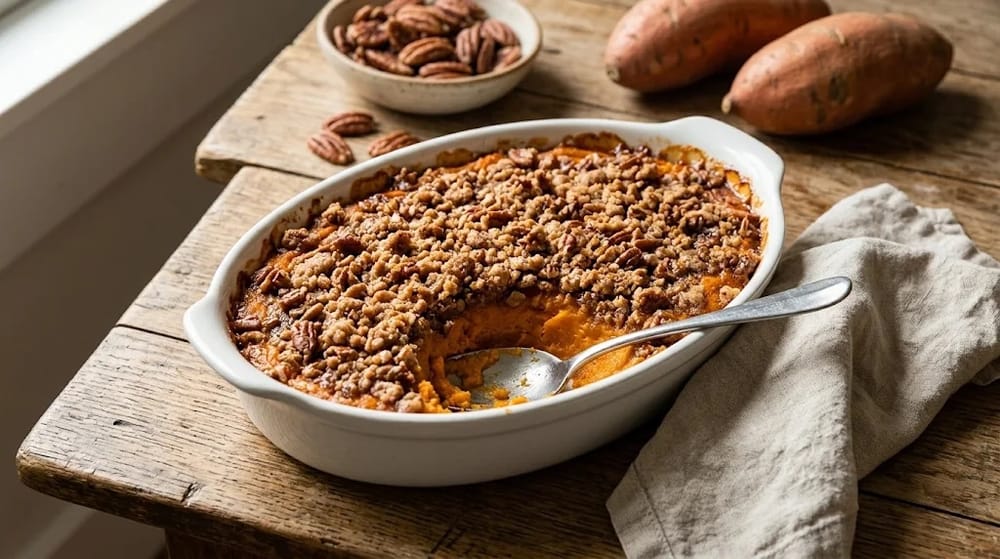
Sweet Potato Casserole with Pecan Topping
A smooth, lightly sweet sweet potato casserole baked under a crunchy brown sugar pecan topping. Mix it up to 2 days ahead and bake it on Thanksgiving.
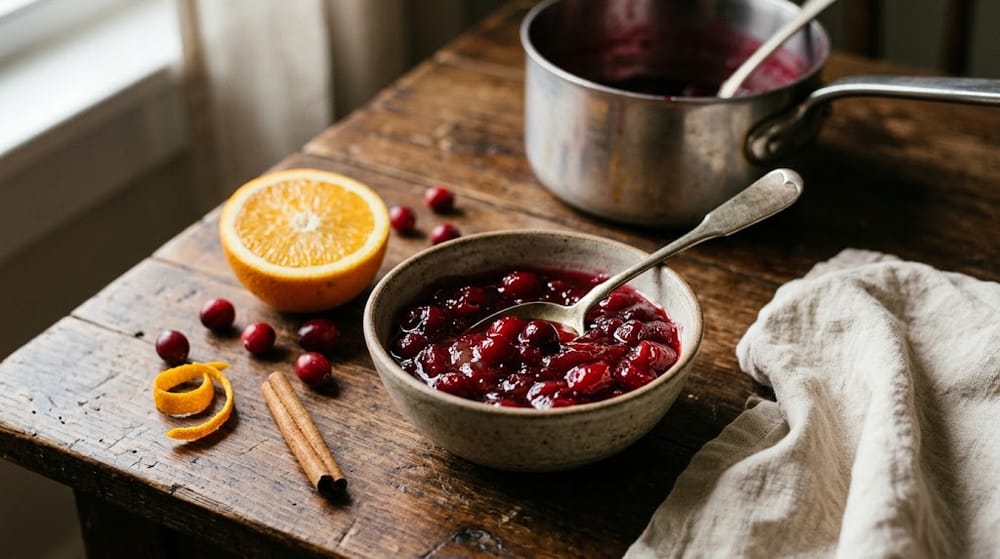
Homemade Cranberry Sauce in 15 Minutes
One bag of cranberries, a cup of sugar, and a little orange juice simmered until the berries burst. It sets as it cools and keeps up to a week in the fridge.