
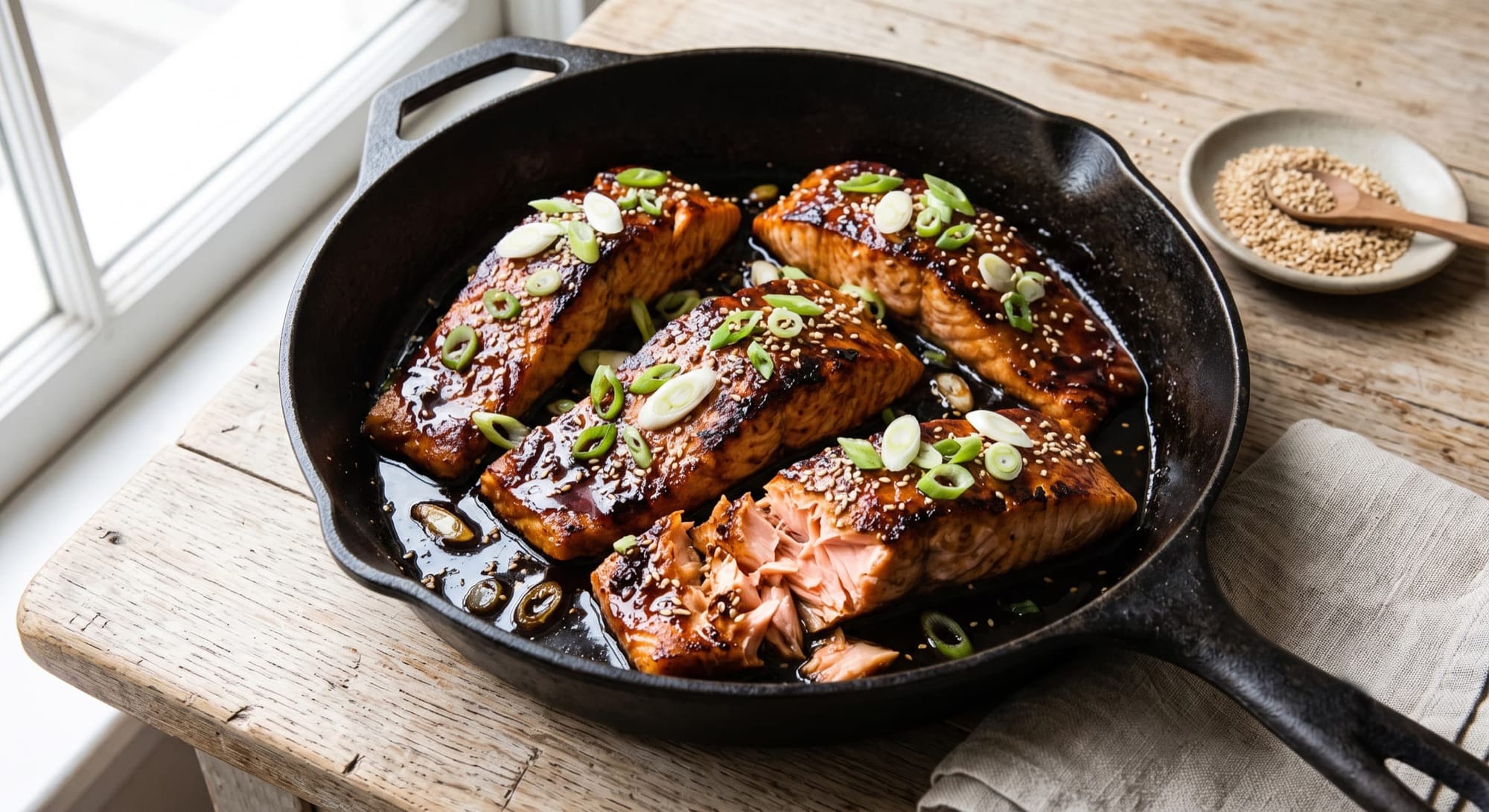
Honey Soy Glazed Salmon
Recipes developed and tested by the ChefnFood editorial team, with chef-informed notes for real home kitchens.
Twenty minutes, four ingredients in the glaze, and a piece of fish that looks like it took considerably more effort. The glaze goes in at the end rather than as a marinade, because honey burns. Three minutes of basting turns it into lacquer.
Ingredients
- 4 salmon fillets (6 oz each), skin on or off
- ¾ tsp kosher salt
- ¼ tsp black pepper
- 1 tbsp neutral oil
- 3 tbsp honey
- 3 tbsp soy sauce
- 2 cloves garlic, minced
- 1 tbsp rice vinegar
- 1 tsp toasted sesame oil
- 2 scallions, sliced
- 1 tsp sesame seeds
Instructions
- Pat the salmon completely dry and season with salt and pepper. Let it sit at room temperature while you mix the glaze — cold fish straight from the fridge cooks unevenly.
- Whisk the honey, soy sauce, garlic, rice vinegar, and sesame oil together.
- Heat the neutral oil in a large nonstick or well-seasoned skillet over medium-high. Add the salmon presentation-side down (skin-side up if skinless) and cook undisturbed 4 minutes until a golden crust forms.
- Flip carefully. Cook 3 minutes more.
- Pour the glaze into the pan around the fish. It will bubble hard. Reduce heat to medium and spoon the glaze over the fillets continuously for 2–3 minutes as it thickens to a syrup.
- Salmon is done at 125–130°F for medium, when it flakes but the center is still deep pink. The FDA recommends 145°F if you prefer it fully cooked. Top with scallions and sesame seeds and spoon the remaining pan glaze over.
Chef’s Take
Honey burns. That’s the only real hazard here, and it’s why the glaze goes in at the end rather than as a marinade — sugar hitting a hot pan for 7 minutes turns black and bitter, but 3 minutes of basting turns it into lacquer. The continuous spooning isn’t decorative either; it’s how you build layers of glaze on the surface instead of one thin coat.
Pro tip: salmon carries over 5–8°F after it leaves the heat. Pull it a little before the number you want. Overcooked salmon is the single most common home-kitchen fish mistake, and it happens in the last 90 seconds.
Substitutions
- Frozen salmon: thaw fully overnight in the fridge and pat aggressively dry.
- Other fish: cod, halibut, or arctic char all work. Thin fillets need less time — check at 4 minutes total.
- Gluten-free: tamari or coconut aminos.
- No honey: maple syrup gives a similar glaze with a different, slightly darker flavor.
- Chicken thighs work with the same glaze; cook to 165°F, roughly 12 minutes total.
Storage and reheating
Refrigerate up to 3 days. Salmon reheats badly — it goes dry and the smell takes over a kitchen. Better plan: eat it cold, flaked over a salad or into rice bowls the next day. If you must reheat, do it covered at 275°F for 10 minutes. Don't freeze cooked salmon.
Serving suggestions
Steamed rice and something green — bok choy, snap peas, or roasted asparagus. A cucumber salad with rice vinegar is the ideal cold counterpoint to the sweet glaze.
More weeknight dinners like this one
The Weekly Meal Plan — five dinners and a grocery list, every Thursday.
More Quick Dinners
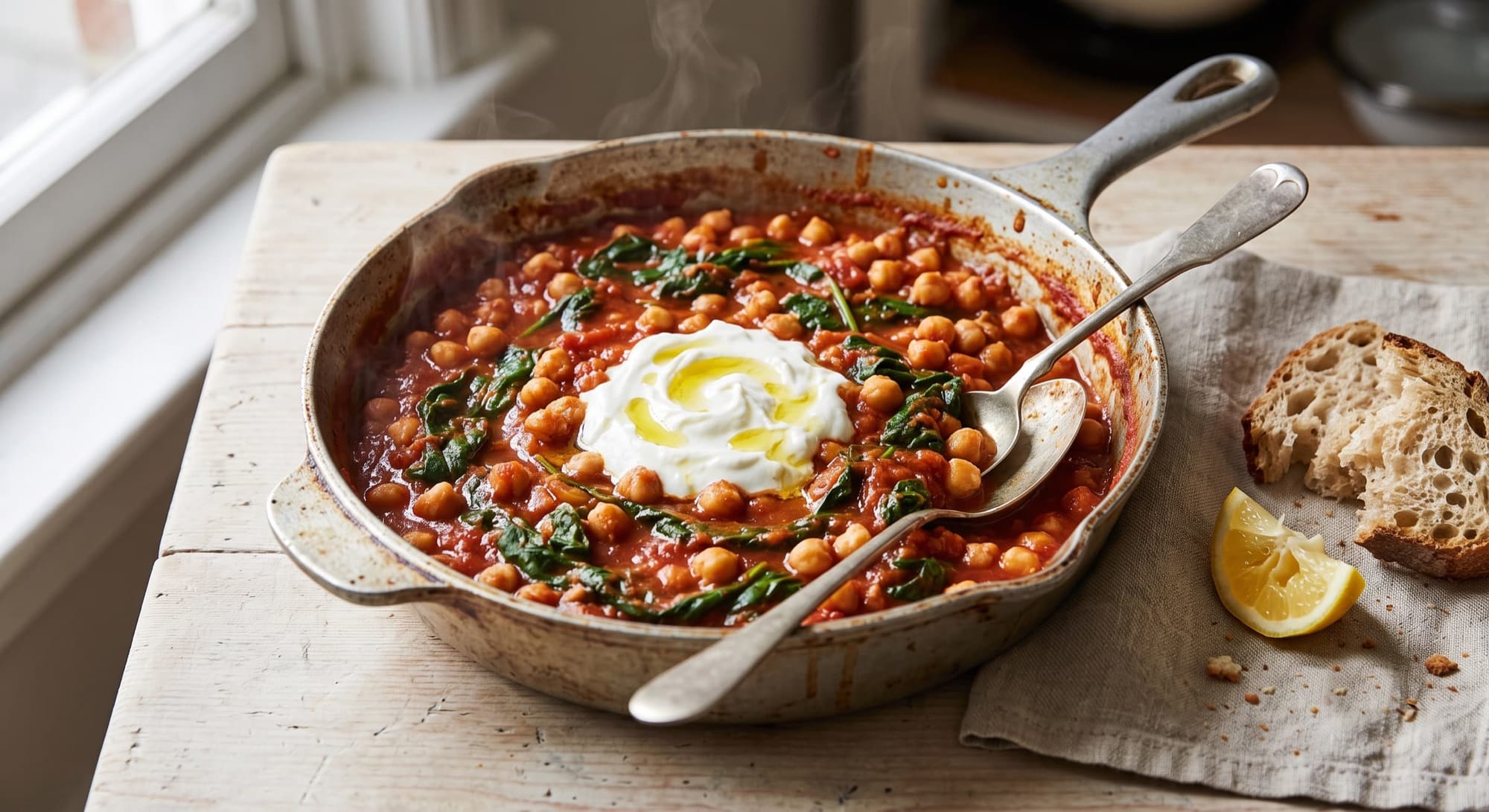
Spicy Chickpea and Spinach Skillet
Pantry to plate in 25 minutes, entirely meatless, and filling enough that nobody asks where the meat is.
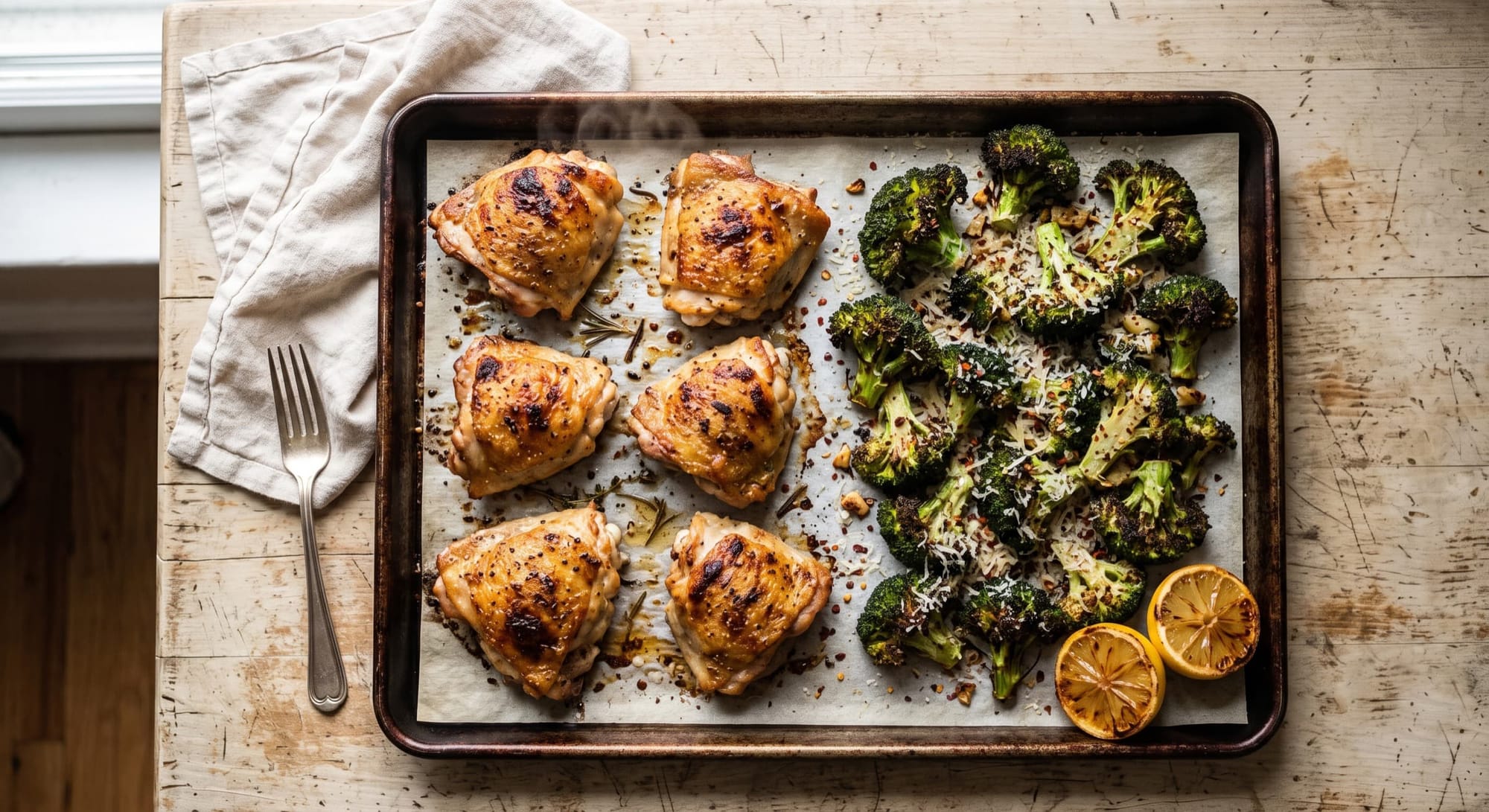
Crispy Chicken Thighs with Charred Broccoli
One sheet pan, two components, thirty minutes. The broccoli roasts in chicken fat, which is the entire reason people who claim to hate broccoli eat this.
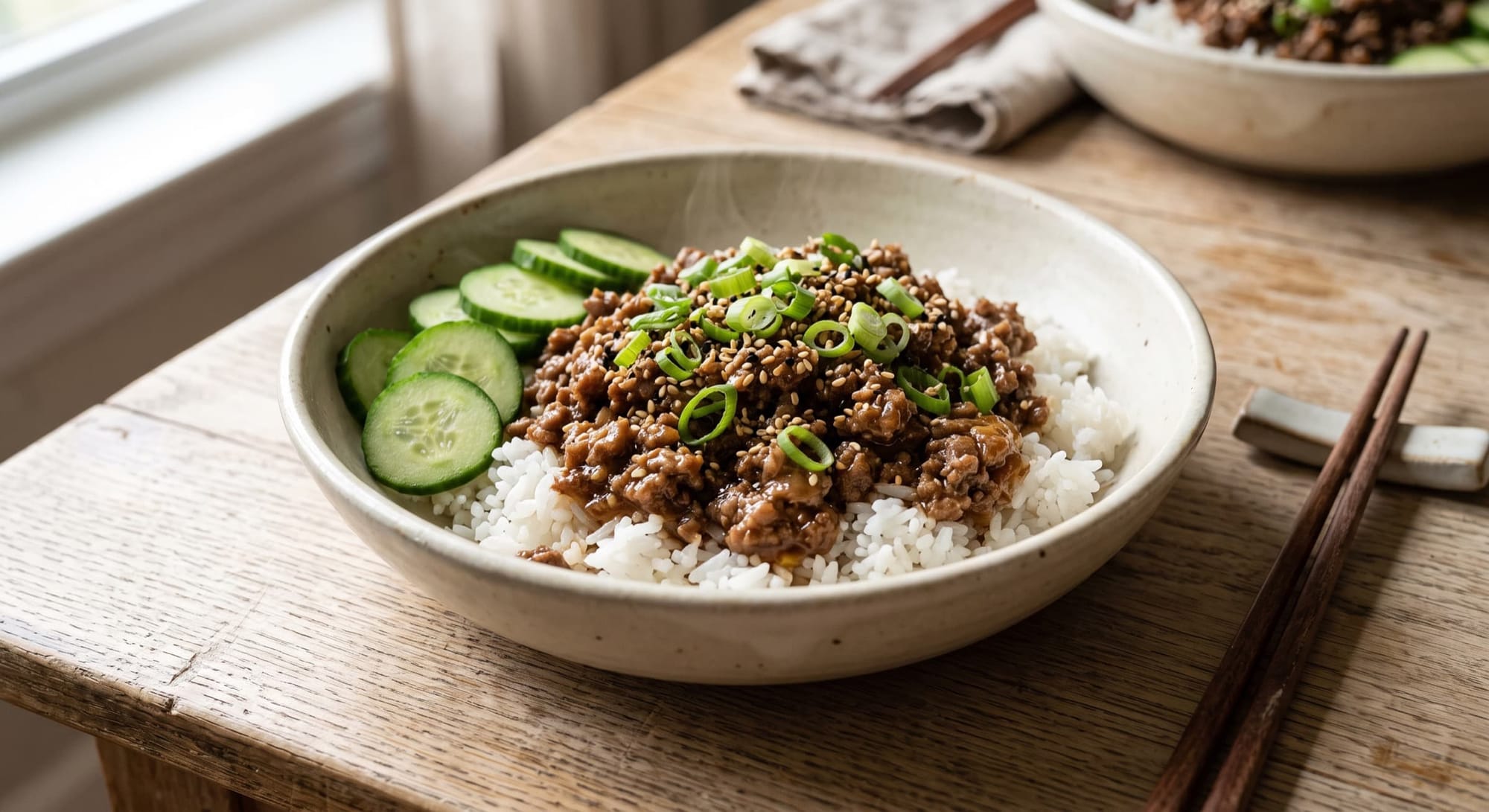
20-Minute Sesame Ground Beef Bowls
Sweet, salty, and on the table faster than takeout arrives. One skillet, pantry sauce, and rice you probably already have.