

Roasted Butternut Squash Soup
Recipes developed and tested by the ChefnFood editorial team, with chef-informed notes for real home kitchens.
This easy butternut squash soup gets its deep, slightly sweet, flavorful character from the oven, not from a long list of ingredients. Roast the squash with onion, carrot, and garlic until the edges brown, simmer everything in broth for 10 minutes, and blend until smooth and creamy. A splash of heavy cream is optional, and a teaspoon of vinegar at the end keeps the soup from tasting flat. It reheats well, freezes well, and makes an easy first course for Thanksgiving or a cozy weeknight dinner with a loaf of crusty bread.
Ingredients
- 1 large butternut squash (about 3 lb), peeled, seeded, and cut into 1-inch cubes (about 8 cups)
- 1 medium yellow onion, cut into 8 wedges
- 1 medium carrot, peeled and cut into 1-inch pieces
- 4 cloves garlic, left in their skins
- 3 tbsp olive oil
- 1 tsp kosher salt, plus more to taste
- ½ tsp black pepper
- 4 cups low-sodium vegetable broth or chicken broth, plus more to thin
- 1 tsp fresh thyme leaves or 6 fresh sage leaves (or ½ tsp dried thyme)
- ⅛ tsp ground nutmeg
- ½ cup heavy cream or full-fat coconut milk (optional)
- 1 to 2 tsp apple cider vinegar or fresh lemon juice
- To garnish: sour cream, roasted pumpkin seeds, a drizzle of olive oil, cracked black pepper
Instructions
- Heat the oven. Preheat the oven to 425°F with racks in the upper and lower thirds. Line two rimmed baking sheets with parchment paper.
- Roast the butternut squash. Toss the squash, onion, and carrot with the olive oil, salt, and pepper. Spread them in a single layer across both pans with a little space between pieces, and tuck the garlic cloves in among them. Roast 35 to 45 minutes, stirring and swapping the pans halfway through, until the squash is tender all the way through and browned at the edges.
- Simmer. Squeeze the roasted garlic out of its skins into a large pot or Dutch oven. Add the roasted vegetables, broth, thyme, and nutmeg. Bring to a boil over medium-high heat, then reduce the heat and simmer 10 minutes, stirring occasionally, so the flavors blend.
- Blend the soup. Use an immersion blender to blend the soup right in the soup pot until completely smooth, about 2 minutes. If you pour the soup into a countertop blender instead, let it cool for a few minutes, work in batches, fill the jar no more than half full, take the center cap out of the lid, and hold a folded towel over the opening so steam can escape. Start on low speed.
- Finish and season. Return the soup to low heat. Stir in the cream, if using, and 1 tsp of vinegar. Add broth or water a little at a time if the soup is thicker than you like. Taste, then season with salt and pepper and more vinegar as needed.
- Serve. Ladle into bowls and garnish with a dollop of sour cream, roasted pumpkin seeds, a drizzle of olive oil, and black pepper.
Chef’s Take
Many butternut squash soup recipes simmer raw squash in broth, and that works, but roasting is what makes this one taste like more than the sum of its parts. Dry oven heat browns the edges and cooks off water, so the squash flavor gets more concentrated instead of diluted. Give the pieces room on the pan. Crowded squash steams, stays pale, and tastes like boiled squash.
Chef trick: the vinegar is the step most people skip and the one that matters most. Butternut squash is sweet and rich, and a teaspoon of acid at the end wakes everything up. If the soup tastes flat after salting, it almost always needs acid, not more salt.
Substitutions
- Vegan butternut squash soup: use vegetable broth and full-fat coconut milk instead of cream.
- Pre-cut or frozen squash: about 2½ lb of pre-cut butternut squash works the same way. Frozen squash cubes can go straight onto the pans without thawing; they release more water, so they may need 10 to 15 extra minutes to brown.
- Other squash: University of Illinois Extension suggests acorn, buttercup, delicata, or Hubbard squash, or sweet potatoes or pumpkin, in place of butternut.
- Curried butternut squash soup: toss the vegetables with 2 tsp curry powder before roasting, use coconut milk, and finish with lime juice instead of vinegar.
- Pumpkin soup: use 3 lb of peeled sugar pumpkin or another pie pumpkin in place of the butternut squash and roast it the same way.
- Apple: roast 1 tart apple, cored and quartered, with the squash for a slightly fruity soup.
- No blender: mash the soup in the pot with a potato masher for a rustic, chunky texture.
How to peel and cut a butternut squash
Scrub the squash under running water first, as University of Illinois Extension recommends for whole produce. Then:
- Trim about ½ inch off the top and bottom so the squash sits flat on the cutting board.
- Cut the squash crosswise where the narrow neck meets the round bulb.
- Stand each piece on its flat end and peel down the sides with a sharp Y-shaped vegetable peeler or a chef's knife, removing the pale layer under the skin too.
- Halve the bulb, scoop out the seeds, and cut everything into 1-inch cubes. Save the seeds; butternut squash seeds roast just like pumpkin seeds in our guide to how to roast pumpkin seeds.
A heavy chef's knife, a vegetable peeler, and a large cutting board make this much easier; all three are on our essential kitchen tools list.
Storage and reheating
Cool the soup quickly. USDA's Food Safety and Inspection Service says a large pot of soup takes a long time to cool, so divide it into smaller, shallow containers and refrigerate within 2 hours of cooking. Refrigerated soup keeps 3 to 4 days. For the freezer, FoodSafety.gov's cold storage chart lists soups at 2 to 3 months for best quality. If you plan to freeze a batch, leave out the cream and add it after reheating; dairy can separate when frozen.
To reheat, bring the soup to a rolling boil, as FSIS recommends for leftover soups and sauces, stirring often so the bottom does not scorch. Thin it with a little broth if it thickened in the refrigerator.
Serving suggestions
Serve this hot soup with crusty bread, a grilled cheese sandwich, or a green salad with apples and toasted nuts. For Thanksgiving, pour it into small cups as a first course. Fresh sage or thyme on top adds color; our guide to how to store fresh herbs helps the rest of the bunch last until the holiday.
FAQ
Do you have to peel butternut squash for soup?
For this method, yes. The skin stays tough after roasting cubes. If you would rather not peel, halve the squash lengthwise, scoop out the seeds, roast the halves cut side down at 425°F until very soft, about 45 to 60 minutes, and scoop the flesh out of the skin.
Can you freeze butternut squash soup?
Yes. Cool it quickly, freeze it in airtight containers with an inch of headspace, and use it within 2 to 3 months for best quality. Freeze it before adding cream if you can.
Is butternut squash soup healthy?
Made this way, it is mostly vegetables and broth, with about 1 tablespoon of olive oil per 2 servings. The cream is the main source of saturated fat, so leave it out or use less for a lighter, healthy butternut squash soup. Low-sodium broth lets you control the salt.
Why is my butternut squash soup bland?
It usually needs more salt, a little acid, or both. Season in small amounts and taste between additions. Using unroasted squash or watery broth also makes a thinner-tasting soup.
How do you make butternut squash soup creamy without cream?
Blend it longer. Roasted butternut squash purees into a naturally smooth, creamy soup on its own. Coconut milk, a spoonful of sour cream, or a small peeled potato roasted with the squash also add body.
Sources
More weeknight dinners like this one
The Weekly Meal Plan: five dinners and a grocery list every week, plus new recipes.
More Seasonal Picks
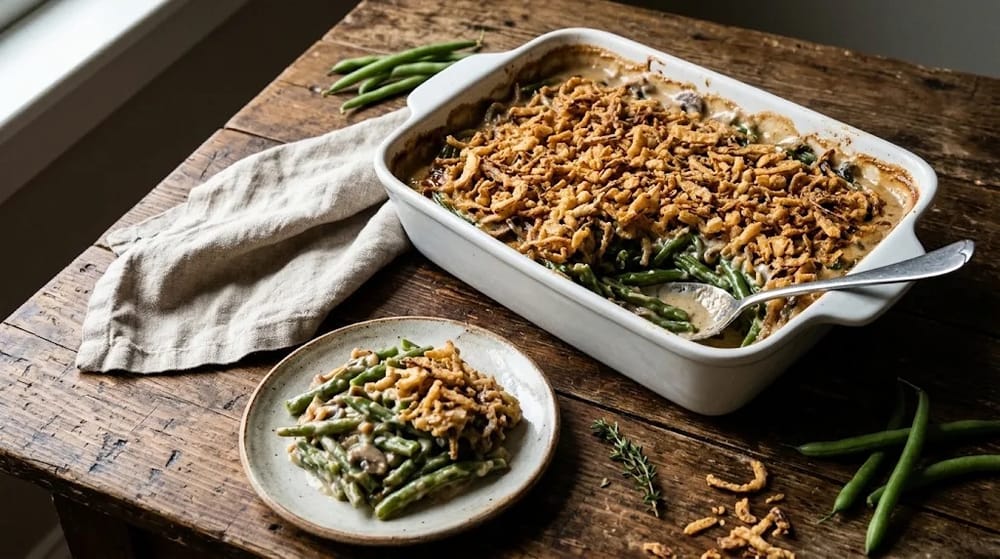
Green Bean Casserole From Scratch
Fresh green beans, browned mushrooms in a quick homemade sauce, and crispy skillet-fried onions. No canned soup, and you can assemble it a day ahead.
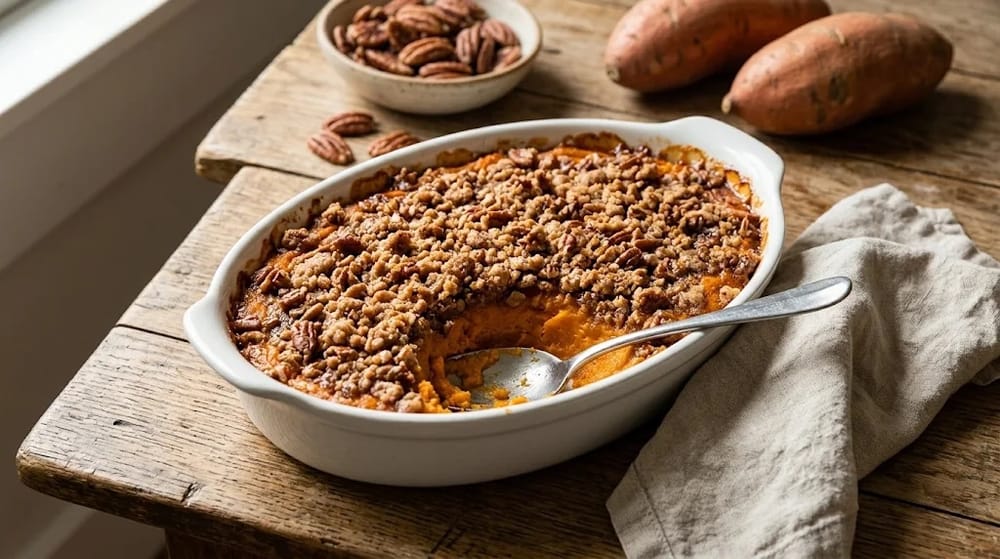
Sweet Potato Casserole with Pecan Topping
A smooth, lightly sweet sweet potato casserole baked under a crunchy brown sugar pecan topping. Mix it up to 2 days ahead and bake it on Thanksgiving.
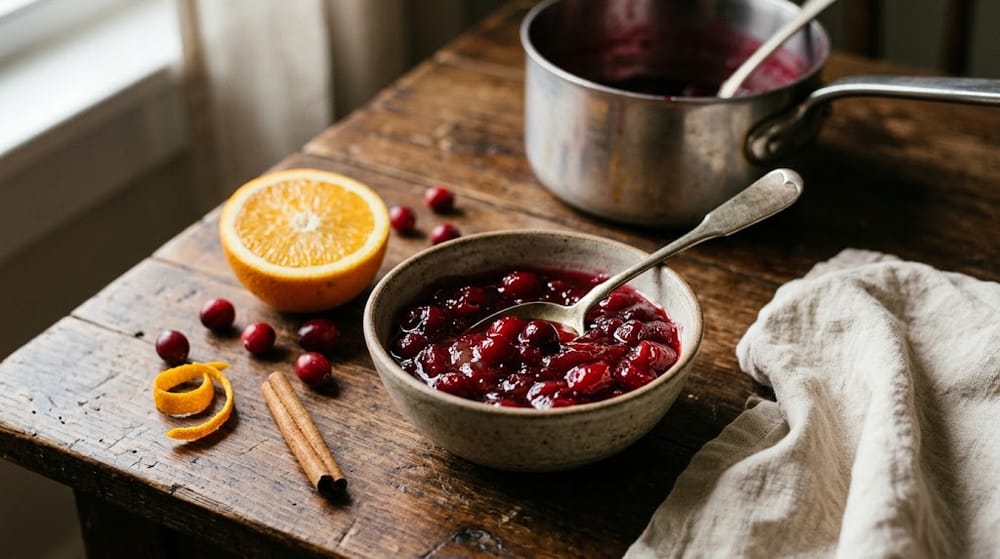
Homemade Cranberry Sauce in 15 Minutes
One bag of cranberries, a cup of sugar, and a little orange juice simmered until the berries burst. It sets as it cools and keeps up to a week in the fridge.