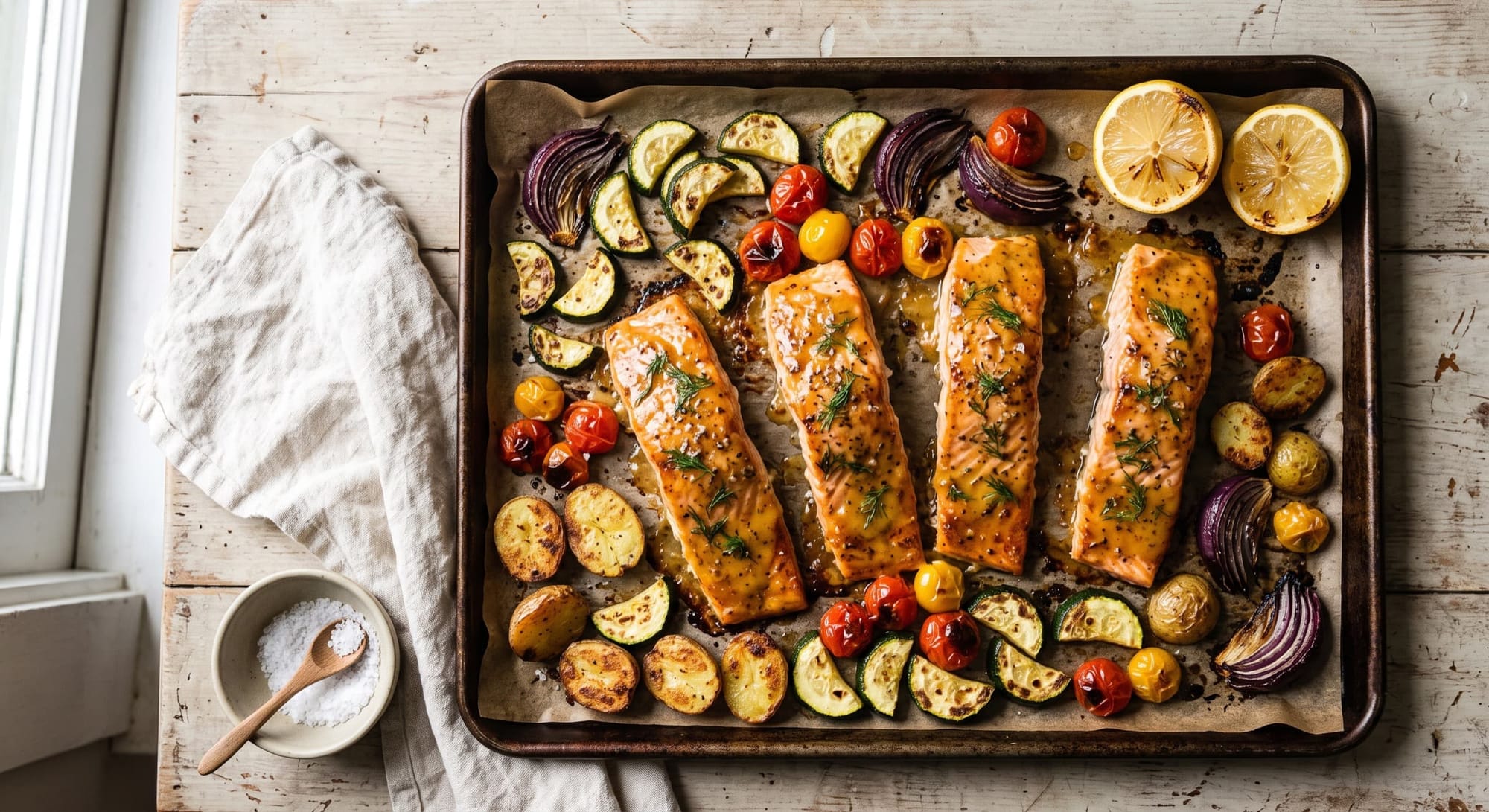
Sheet-Pan Honey Mustard Salmon with Summer Vegetables
Recipes developed and tested by the ChefnFood editorial team, with chef-informed notes for real home kitchens.
One pan, thirty-five minutes, and the kind of light dinner that still reads as a real meal at the end of a hot day. Staggering is the entire skill — potatoes need thirty-two minutes, zucchini needs fourteen, salmon needs thirteen. The Dijon in the glaze is what keeps it from sliding off the fish.
Ingredients
- 4 salmon fillets (6 oz each)
- 1 lb baby potatoes, halved
- 2 zucchini, cut into thick half-moons
- 1 pint cherry tomatoes
- 1 red onion, cut into wedges
- 3 tbsp olive oil, divided
- 1½ tsp kosher salt, divided
- ½ tsp black pepper
- 1 lemon, halved
- Honey mustard glaze
- 3 tbsp Dijon mustard
- 2 tbsp honey
- 1 tbsp olive oil
- 1 clove garlic, minced
- 1 tsp fresh thyme leaves (or ½ tsp dried)
- ¼ tsp kosher salt
Instructions
- Heat the oven to 425°F.
- Toss the potatoes with 1½ tbsp olive oil and ½ tsp salt. Spread cut-side down on a large sheet pan and roast 20 minutes alone. They need the head start.
- Toss the zucchini, tomatoes, and red onion with the remaining 1½ tbsp oil, ½ tsp salt, and the pepper.
- Whisk all the glaze ingredients together.
- Pull out the pan. Push the potatoes to one end, add the vegetables, and clear four spaces for the salmon. Pat the fillets dry, season with the remaining ½ tsp salt, and set them on the pan. Spoon the glaze generously over each fillet.
- Roast 12–14 minutes, until the salmon reaches 125–130°F for medium (or 145°F if you prefer it fully cooked) and the zucchini is tender with browned edges.
- Squeeze half the lemon over the whole pan and cut the rest into wedges for serving.
Chef’s Take
Staggering is the entire skill in sheet-pan cooking, and salmon makes it obvious: potatoes need 32 minutes, zucchini needs 14, salmon needs 13. Put them in together and you either eat raw potatoes or ruined fish. Twenty minutes of potatoes alone, then everything else — that’s the whole recipe, and the same logic transfers to any sheet-pan dinner you improvise later.
Pro tip: Dijon is an emulsifier, which is why this glaze doesn’t slide off the fish the way a plain honey glaze would. It’s the same property that makes mustard the backbone of a vinaigrette. That’s also why you can spoon it on thickly at the start and it stays put through the whole roast.
Substitutions
- Any firm fish: cod, halibut, or arctic char. Thinner fillets need 9–10 minutes.
- Chicken thighs: add them with the potatoes at minute 0 and cook to 165°F.
- Vegetables: asparagus (add in the last 10 minutes), green beans, bell peppers, or broccoli.
- No honey: maple syrup works in the glaze.
- Whole-grain mustard for a coarser, sharper glaze.
Storage and reheating
Refrigerate up to 3 days. As with the honey soy salmon, this is better eaten cold the next day — flaked over greens with the leftover roasted vegetables and a squeeze of lemon — than reheated. If you do reheat, cover it and use 275°F for 10 minutes. Don't freeze.
Serving suggestions
Complete as-is. A dollop of Greek yogurt mixed with lemon and dill on the side is a good addition. Crusty bread if you want to make it bigger.
More weeknight dinners like this one
The Weekly Meal Plan — five dinners and a grocery list, every Thursday.